
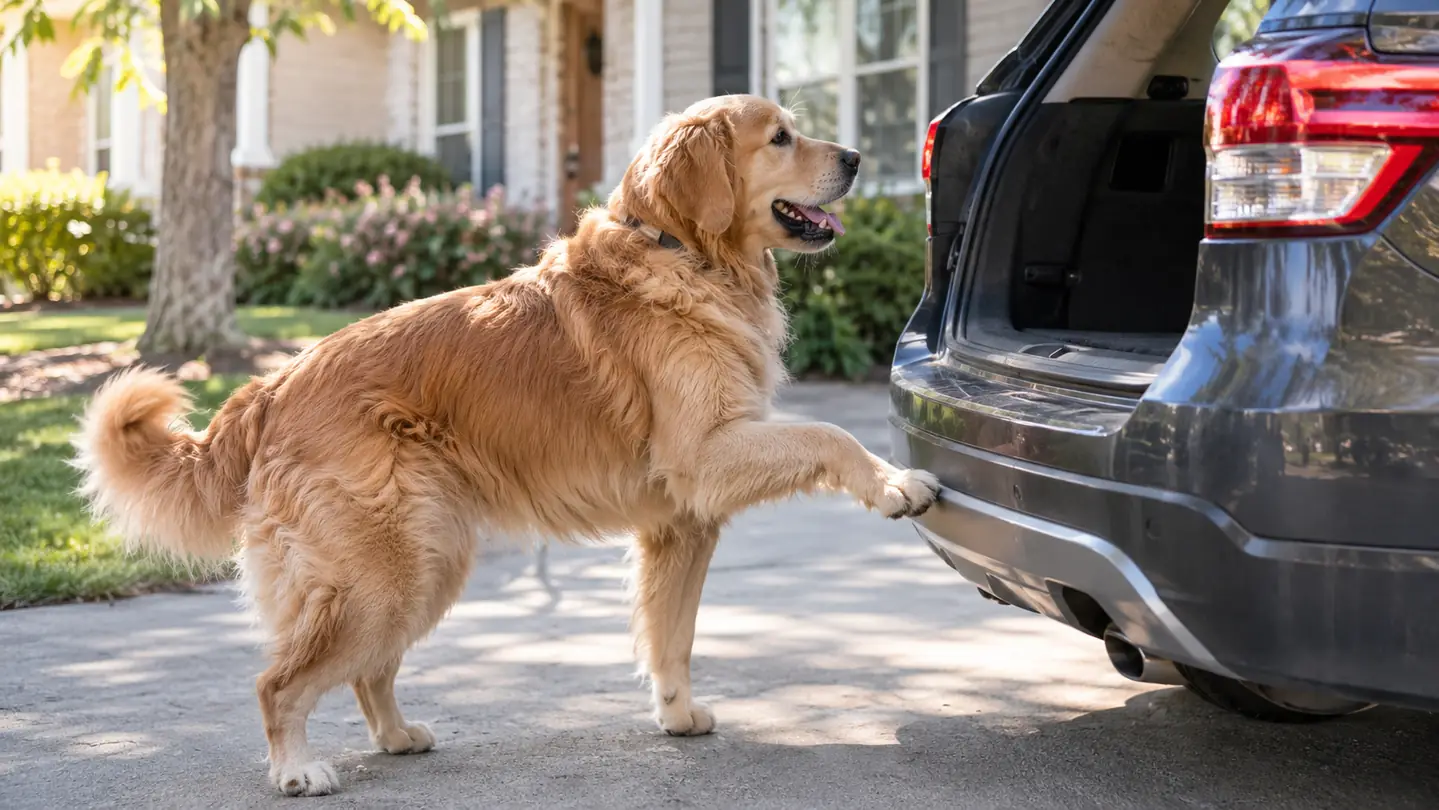
Tucker is ten. A Labrador mix, about seventy pounds, and for most of his life he hit the back of my Subaru Outback like it was nothing. Then last fall he started doing the thing I had been pretending not to see. He would stand at the open hatch, lift one front paw toward the bumper, put it back down, and look at me. No whine. No drama. Just a dog doing arithmetic he did not like.
That look is what sent me reading ingredient panels. I had already tried a spoon of fish oil over his kibble and a hard tablet he spat on the rug twice. What I settled on, after a vet appointment and a lot of squinting at small print, was VETIQ Glucosamine Hip & Joint Chews. I am not going to tell you they gave me my puppy back. I am going to tell you about a car ride that got easier, because that is what actually happened.
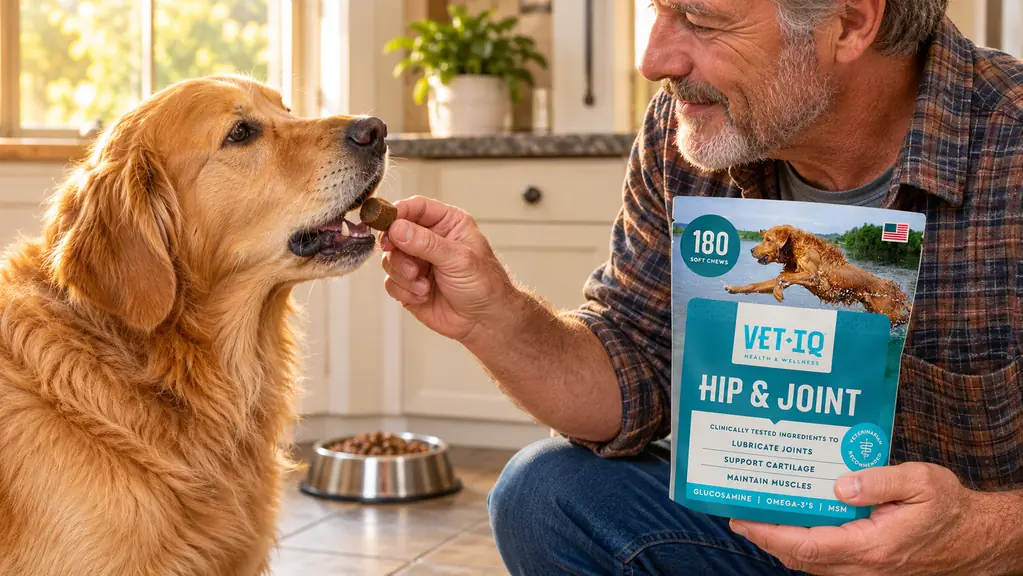
Our vet was clear about two things, and I have repeated them to three neighbors since. First, Tucker has the ordinary wear you would expect in a ten year old large dog, nothing on the x-ray that needed more than support and sensible exercise. Second, a soft chew is a supplement and not a treatment. If he had been limping or yelping, we would have been doing something else entirely. That framing kept me honest about what I was watching for.
The tub that arrived lists glucosamine HCL at 600 mg, plus MSM, krill at 210 mg and fish oil at 280 mg, in a chicken flavored soft chew. It is a 180 count container, which is a long runway for a dog Tucker's size, and you should follow the label and your vet on the amount rather than anything you read here. The chews are soft enough to break with a thumbnail, which matters when you are standing at the counter at six in the morning with a dog staring at you.
The first two weeks, nothing. I want to say that plainly, because the reviews I read before buying all seemed to promise a different dog by day three. What I had instead was a dog who took the chew happily and then went about his business. I kept a note on my phone anyway: the date, whether he hesitated at the car, and how he did on the river trail that weekend.
By week six, the pause at the back of the Outback was shorter than the time it took me to open the hatch. That was the whole change, and it was enough.
The chew that shortened the pause at my tailgate
VETIQ Glucosamine Hip & Joint Chews, 180 soft chews with glucosamine HCL, MSM, krill and fish oil. Rated 4.6 out of 5 across more than 30,000 ratings from owners watching the same small things you are.
Amazon Check Today's Price on Amazon →By the sixth week, the arithmetic at the hatch had changed. He still sizes up the jump. He just does it in one motion now instead of two, and he lands and walks it off instead of standing there collecting himself. On the river trail he sets a pace I have to work to keep up with, which at fifty eight is a sentence I did not expect to write about either of us.
The stairs are a smaller story but a more frequent one. He sleeps upstairs and always has, and for a year I heard every single step at bedtime. I still hear him. What changed is the top of the stairs. He used to stand there a moment before turning toward the bedroom, and now he just turns. Ten times a week, that adds up to something.

Here is what the chews did not do. They did not fix his nails, which had grown long enough to change how he stood, and our vet trimmed them and told me to stop skipping that. They did not take the place of keeping his weight where it should be. A seventy pound dog who creeps toward eighty is asking more of his joints, and no chew argues with that. He gets weighed on the same scale at the same clinic once or twice a year, and I pay attention to the number.
One honest note on the practical side. The chews smell like a fish counter. That is not a complaint, just a warning if you have a sensitive nose or a small kitchen. Tucker takes them from my palm without the spit it on the rug routine, and that is the only taste test that means anything to me. The chicken flavor is the whole reason I am not still negotiating with him twice a day.
What I'd Tell You If We Were Sitting at My Kitchen Table
First, get the diagnosis before you get the supplement. I mean that. There are things that look like stiffness in an older dog and are not, and a vet who has watched your dog for years will spot them faster than any label on a tub. Bring the note from your phone. Mine had six weeks of small observations on it, and that was more useful in the exam room than anything I could have said from memory.
Second, pick one measure before you start and then leave it alone. Mine was the car. Yours might be the stairs, or how your dog gets up off the kitchen floor, or how far he wants to go on a Saturday. Write it down before day one. Otherwise you will be two months in and guessing whether anything changed, and these changes are small enough that guessing is all you will be doing.
Third, give it time. VETIQ is what we stayed on because the soft chew is easy to hand over and the ingredient amounts are spelled out plainly on the label instead of buried. If you are three months in and the note on your phone says nothing moved, that is worth a conversation with your vet, not a bigger order.
Start the note on your phone, then start the chews
180 chicken flavored soft chews with glucosamine HCL, MSM, krill and fish oil. VETIQ keeps it simple: one soft chew, a plain ingredient panel, and a vet visit before you change anything.
Amazon Check Today's Price on Amazon →