
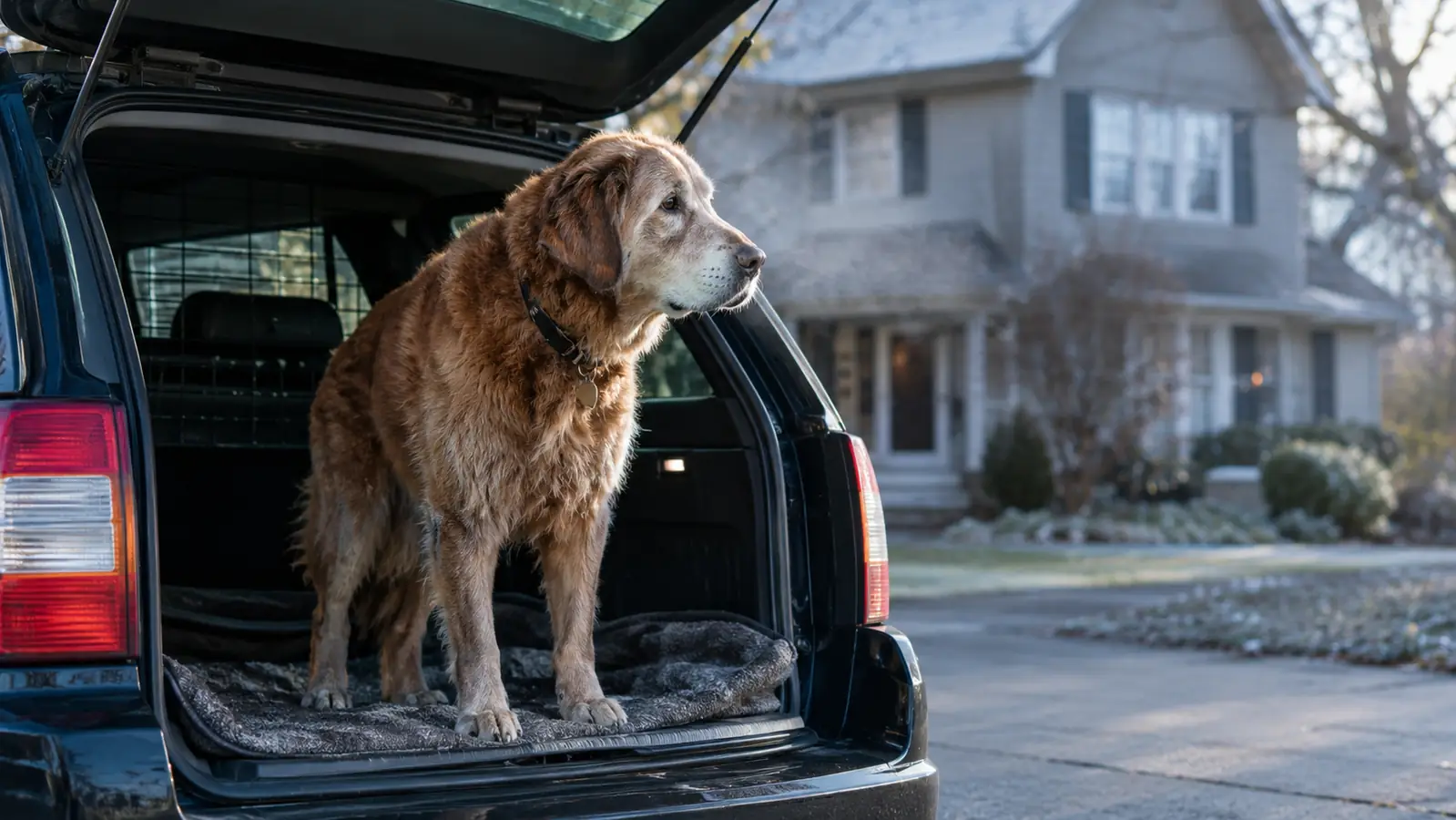
Tucker is ten, a Lab mix, about seventy pounds, and for most of his life he launched into the back of my Subaru Outback like the car owed him something. About a year ago he started stopping first. Front paws on the bumper, a pause, then a second try. Nothing dramatic. Just a dog doing arithmetic he never used to do.
That pause is what sent me looking. Our vet examined him, told me what I already suspected, and then said the unglamorous thing vets say: keep him lean, keep him moving, and if you want to try a joint supplement, be consistent about it. I read labels that whole week. VETIQ Glucosamine Hip and Joint Chews ended up being the one that stayed in the cupboard, mostly because of what is actually printed on the label and how little fuss it takes to give. Here are ten reasons it earned that spot.
600 mg of glucosamine, MSM, and krill in one soft chew, printed plainly on the label
The full ingredient panel is on the tub, not hidden behind a marketing word. Read it the way you would read any food label before you commit to six months.
Amazon Check Today's Price on Amazon →600 mg of glucosamine per chew gives you a real number to work with
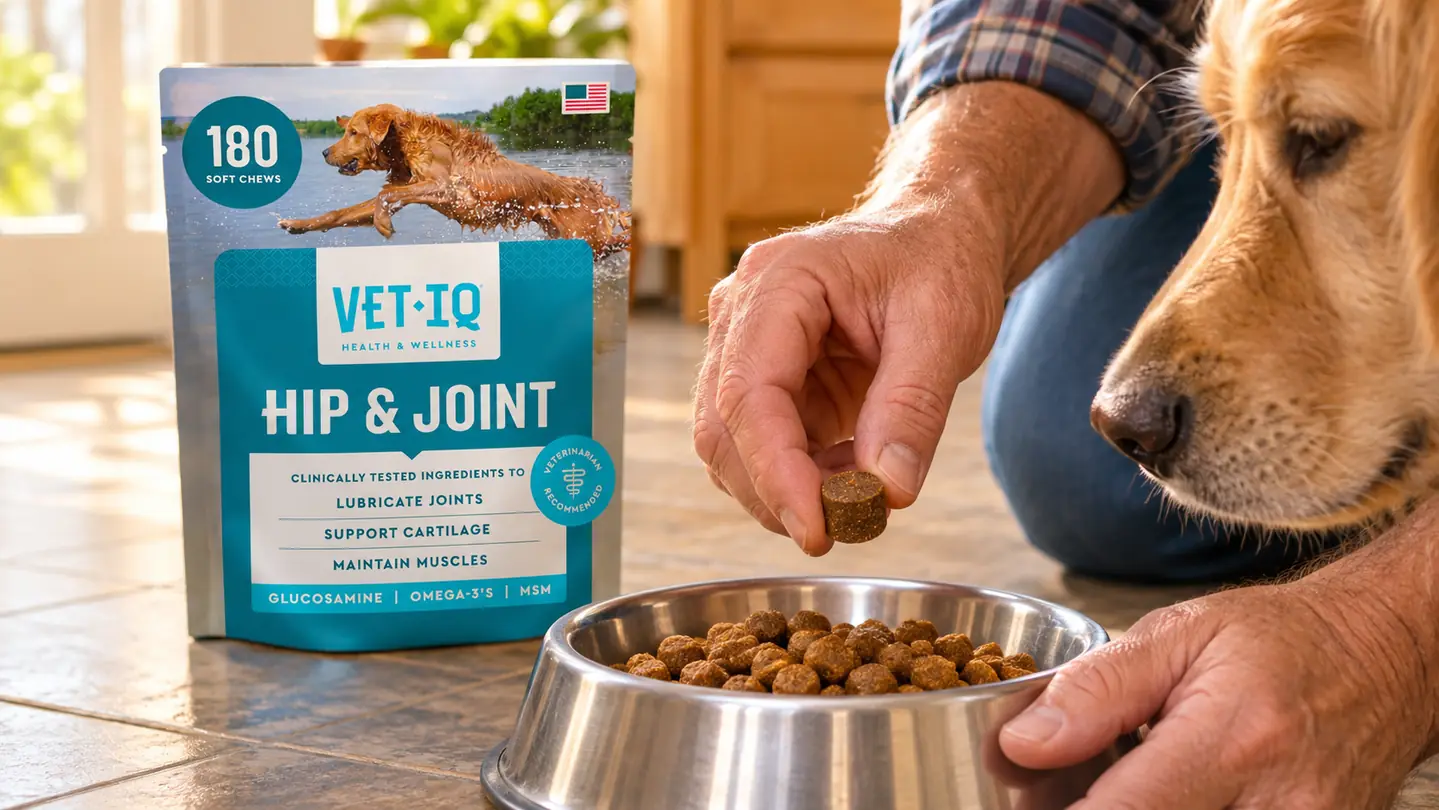
Joint supplements are mostly an argument about numbers, and the first number to check is how much glucosamine is in the chew. The VETIQ label lists glucosamine HCL at 600 mg per soft chew. That is a figure I can put on a sticky note and compare against whatever our vet suggests, instead of guessing what a bag front means when it says plus glucosamine. If your dog is already on a joint product, set the two labels side by side before you add a second one.
MSM is the part aimed at the stiffness that shows up after rest
Stiffness in an older dog has two personalities. There is the stiffness at the end of a long walk, and there is the stiffness of getting up off the kitchen floor after a nap. The second one is what I noticed first with Tucker, and MSM is the ingredient in this formula pointed at it. I am not going to tell you it fixed anything. I will tell you that a few months in, the floor-to-standing transition looked less like a decision he had to make.
Krill sits at 210 mg, next to the fish oil rather than instead of it
Plenty of chews pick one omega-3 source and call it a day. This one lists krill at 210 mg alongside a fish oil figure, which is why I stopped buying a separate oil to squirt over dinner. Krill is often chosen because it comes in a small, easy package, and small and easy is what actually gets used in a house like mine. Whether it does more for a dog than plain fish oil is a question our vet answered with a shrug and a very honest some dogs respond and some do not.
Two omega-3 sources in one chew means one less bottle to forget
Fish oil shows up at 280 mg on the same panel. That is the practical reason this stayed: fewer bottles on the counter means fewer mornings where I skip one of them. If your dog takes anything else, write the whole list down and hand it to your vet before you stack supplements, because that is exactly the conversation I had before I started. Mine wanted to know everything, including the chews, and I would rather be boring about it than guess.
A soft chew ends the peanut-butter-and-pill operation
Tucker is a Labrador mix, which means he will eat nearly anything, so I cannot tell you how this goes with a picky dog. What I can tell you is that a soft chew removes the entire ritual. No pill pocket, no grinding a tablet into canned food, no finding the tablet on the rug an hour later and starting over. I open the tub at the same time every morning, he takes it, and the walk happens. That is the whole sequence.

Chicken flavor is a compliance feature, not a health claim
I am not going to dress this up. Chicken flavor exists so the chew gets eaten instead of negotiated with. A supplement your dog refuses is a supplement you quietly stop buying, and then the months never accumulate and you never learn whether it would have helped. This one goes down without a chaser, which is the only reason I have been steady enough with it to have an opinion worth writing down.
180 chews is long enough to actually judge the thing
The tub holds 180 soft chews. At the once-a-day pace I settled into, that works out to roughly six months, so I am not reordering every few weeks and second-guessing the result. Joint supplements are a consistency game more than anything else. A tub that lasts long enough for a real test is not a small detail, it is the difference between having an opinion and having a hunch.
Soft enough to split while you ease your dog in
I started Tucker on half a chew and watched for any stomach upset, then moved to a full one after a couple of weeks. That was my own cautious approach, not something the label told me to do, and your vet may want a different ramp entirely. The point is that a soft chew gives you room to adjust without a pill cutter and a small prayer. Ask before you change the amount, then change it slowly.
It promises joint support, not a rebuilt hip
Here is what the tub does not say: it does not say this will rebuild anything. It says joint health, and that is the honest size of the promise. What I have seen is a dog who takes the stairs in the morning instead of waiting at the bottom for me, and who loads into the Outback on the first try more often than not. Your vet's diagnosis is the thing that decides what realistic looks like for your dog, not a review.
More than 30,000 ratings means you can read the failures too
The listing carries more than 30,000 ratings at 4.6 stars, which is a large enough sample that the bad ones are easy to find. Read them. The pattern in the negative reviews is usually a dog who would not eat the chew, or an owner expecting a visible change inside a week. Both are worth knowing before you commit to a six-month tub, and neither is a reason to skip the attempt.
Ten reasons is a long list, so let me compress it. The label is specific, the format is easy, the tub lasts long enough to matter, and the promise is small enough to be true. Those four things are why I kept buying it after the first container was empty.
What I'd Skip
I would skip guessing. If your dog is hesitating at the stairs or the back of the car, get the exam first, because there are things a chew cannot touch and a vet can find in twenty minutes. I would skip running two glucosamine products at once without asking, skip the idea that any supplement replaces keeping the weight down, and skip judging the whole thing on ten days.
And I would skip ordering the largest format of anything before my dog has proven he will eat it. Buy the size that lets you test the routine for a few weeks. VETIQ was not the first joint chew I tried with Tucker, but it is the first one where the container actually got finished, and finishing is the only test that counts.
Four months in, he takes the stairs first thing in the morning instead of waiting at the bottom for me. That is a small sentence and it is the whole reason I still buy the tub.
If your dog has started pausing before the stairs, this is where I started
Ask your vet first, then give it four honest months. Same time, same place, one chew, and see what your own kitchen floor tells you.
Amazon Check Today's Price on Amazon →