
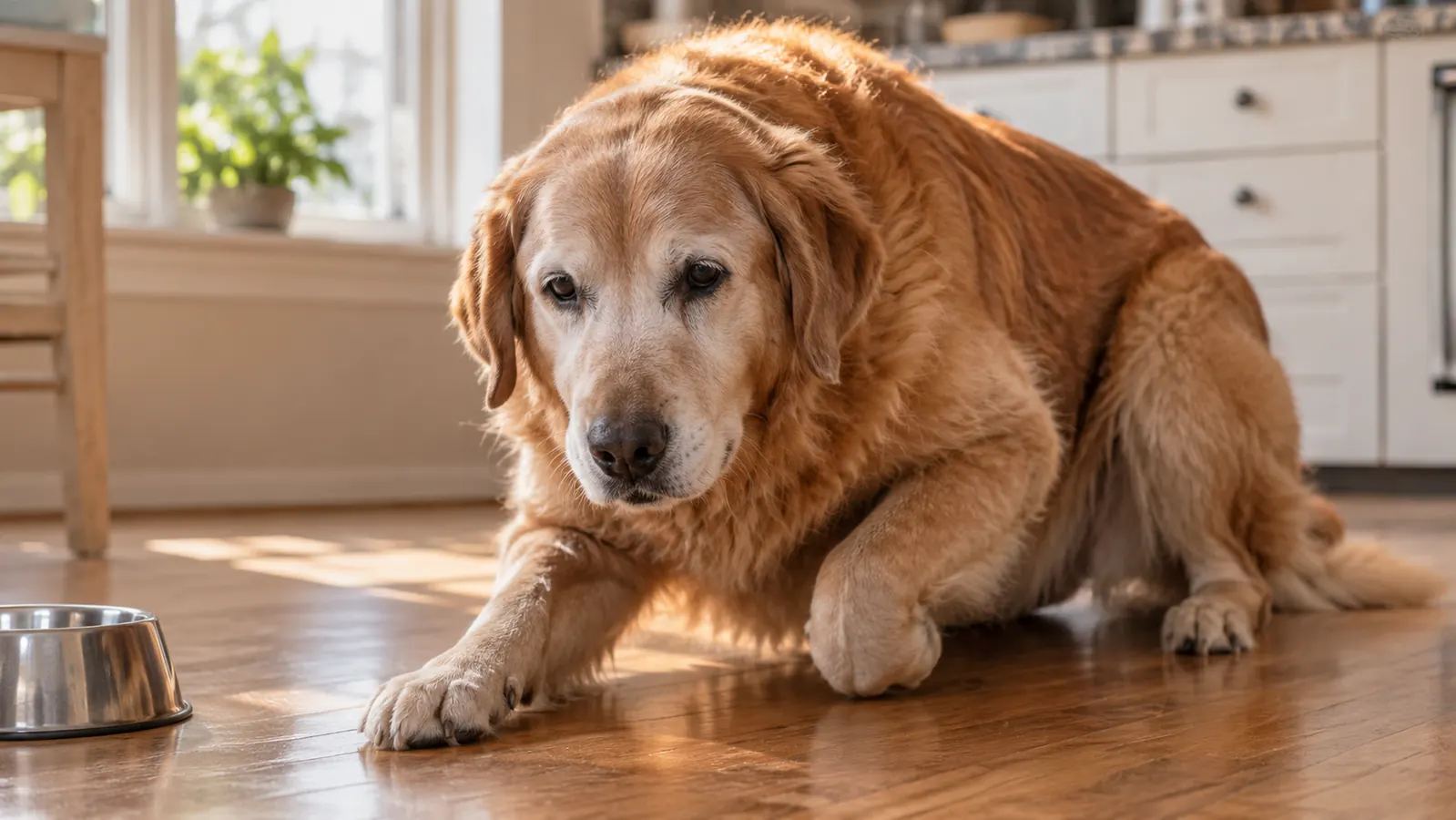
Tucker is ten years old, a Labrador mix who still believes he is four right up until the moment he has to stand up off the kitchen floor. About a year ago he started pausing at the back of my Subaru Outback, front paws on the bumper, deciding whether the jump was worth it. That pause is what sent me looking. Not for a cure, and not for anything that promised to wind a clock backward. Just something I could add to his bowl with a real reason behind it. What I kept coming back to was fish oil, and specifically the liquid Nordic Naturals Omega-3 Pet.
I want to be clear about what this is. It is not a story about a supplement that fixed my dog. It did not. What it is, is ten concrete reasons omega-3s matter for an aging joint, and ten things I actually watched for in the months after I started. If your dog has begun thinking about the stairs before he takes them, this list is for you.
The bottle I started with is small on purpose
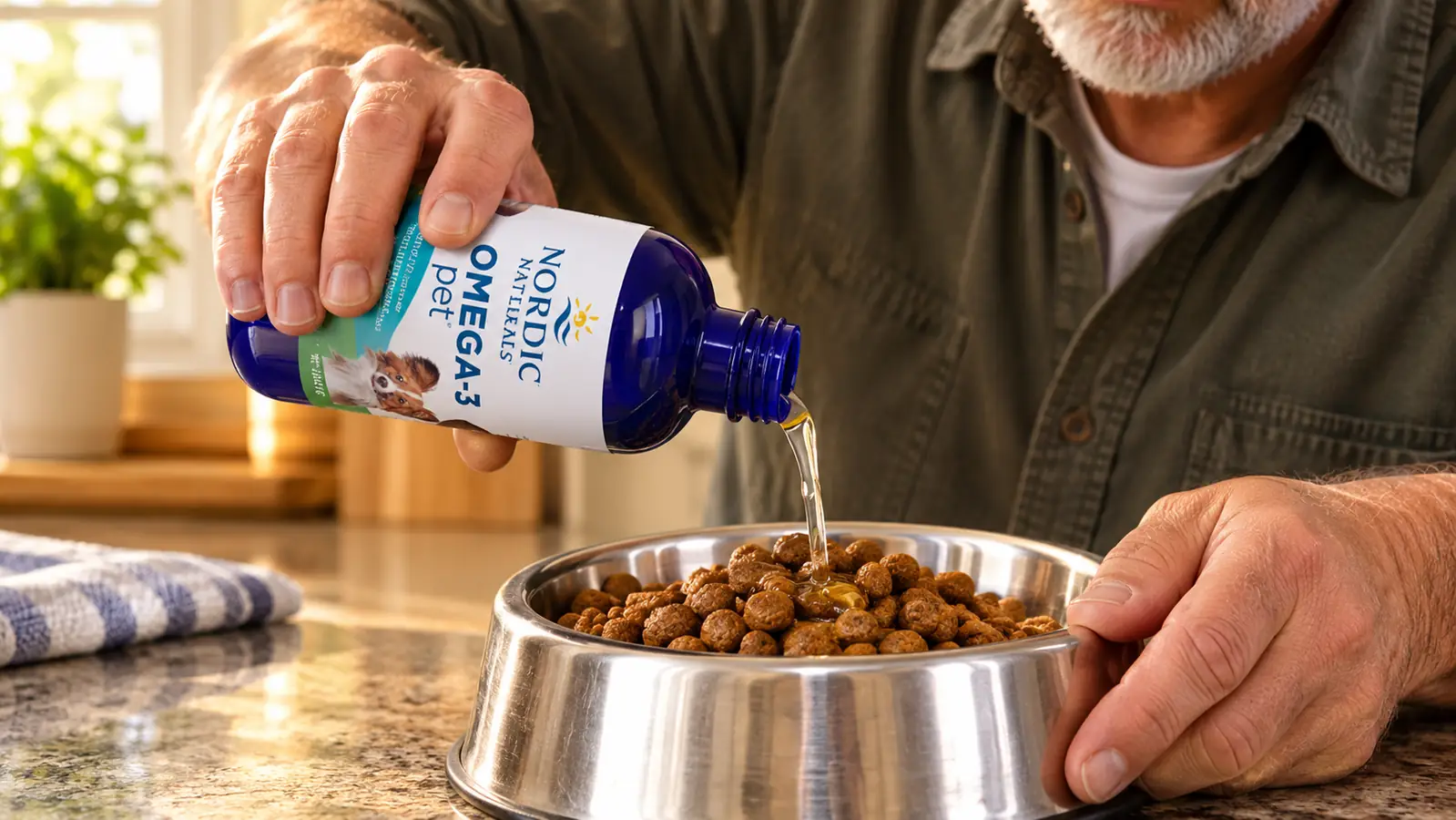
Two fluid ounces of unflavored liquid fish oil, listed at 294 mg with EPA and DHA, made to go straight over kibble. Small enough to be a real tryout before you commit to a bigger size.
Amazon Check Today's Price on Amazon →EPA is the part that goes after joint inflammation
When an older dog is stiff getting up, there is usually a low-grade inflammatory piece underneath it. EPA, one of the two omega-3s in fish oil, is the fraction most studied for that. It is not a painkiller and it does not behave like one. What it does is give the body less raw material for the inflammatory side of the ledger, which is why the effect, when it comes, is gradual and easy to miss. Our vet put it plainly: this is a long game, not a rescue.
It is the same oil, in the form fish actually carry it
Nordic Naturals makes the human fish oils, and this pet bottle comes off the same line. The label notes the oil is in triglyceride molecular form, which is the shape omega-3s take in a real fish rather than the ethyl ester form used in cheaper oils. I am not a chemist. But I do know that when a company bothers to tell you which form it uses, it is usually because it costs more to do it that way.
Unflavored liquid means no pill fight at six in the morning
Tucker is not a dog who takes pills politely. He is a dog who eats the pill, eats the cheese, and then spits the pill onto the floor with a look of deep betrayal. Liquid goes over the food, gets stirred once, and disappears. You measure the amount your vet gives you, pour it on the kibble, and walk away. The label lists it as unflavored, and on a bowl of dry food it smells like a fish counter and tastes like nothing, which is exactly what you want.
The two-ounce bottle is a real tryout, not a supply
The bottle holds two fluid ounces and measures about four inches at its longest, so it lives in a kitchen drawer and does not take over a shelf. That size is also the honest test. If your dog turns his nose up, you have poured out a little oil instead of a lot. With a seventy-pound Labrador, two ounces does not last long, so treat it as the audition and plan on reordering once you know he will eat it.
You will see the coat change before you see the joints change
The listing puts coat, eyes and heart under what this is used for, and the coat is the honest early tell. Dull, dry fur is one of the first things omega-3s touch, and it shifts in weeks rather than months. That mattered to me less for vanity and more as a signal that something in the bowl was actually being absorbed. If two months pass and the coat looks the same and nothing else has moved, you have your answer about whether this dog responds.

Heart and immune support matter more at ten than at two
The product benefits on the label include heart health and immune support alongside eye care, and at this age that is not filler. Our vet has started listening to Tucker's chest at every visit, and I have started paying attention to what she hears. I am not claiming fish oil treats anything cardiac. I am saying that if I am adding a fat to his bowl anyway, I would rather it be one with a reason to be there beyond the joints.
It slides into the routine you already have
There was no new food to transition, no new feeding time, no separate ritual. It goes on top of the same kibble at the same two meals. For a ten-year-old dog, keeping everything else the same is worth something on its own. Every change to a stiff dog's routine is a variable, and variables make it impossible to tell what is working. One addition with everything else held steady is how you actually learn something.
The ingredient list is short, which is the point
Nordic Naturals states the oil is non-GMO, gluten free and dairy free, with no artificial colors, flavors or preservatives. That is a short story, and short is what I want in something I pour on food twice a day for years. The allergen to note is fish, obviously, and if your dog has ever reacted badly to a fish-based food, that is a conversation to have with your vet before the first bottle rather than after.
It gives you something concrete to bring to the vet
Tucker sees our vet once or twice a year, and between visits I am the only one who watches him on the stairs. Writing down what I changed, and when, and how he was moving the week before turned a vague feeling into something the vet could actually work with. The supplement aisle is full of things people start and never track. A date on the calendar and three notes about the stairs are worth more than any of it.
It sets the right expectation: weeks, not days
The biggest thing fish oil gave me was patience. Nothing about an aging joint reverses over a weekend, and anything promising otherwise is lying to you. I put twelve weeks on the calendar before I judged anything, and I judged it on three specific things: getting up off the kitchen floor, the stairs to the bedroom, and the jump into the Outback. That is the whole test. It is not dramatic. It is just honest.
What I'd Skip
If I were starting over, here is what I would not do. I would not start fish oil before a vet has actually put hands on the dog. Stiffness in a ten-year-old Labrador can be arthritis, it can be a soft tissue problem, it can be something else entirely, and no oil in a bottle sorts that out. I would not treat it as a replacement for pain medication if your vet prescribes any. And I would not assume more is better and quietly double the amount, because fat is calories and a seventy-pound dog on a small bottle does not need me freelancing with the dose. Ask for the number. Use the number. Give it weeks.
The jump into the Outback is still a jump. He just takes it in one motion now instead of standing there working out the math.
If your dog has started pausing at the stairs, start with the small bottle
Unflavored liquid fish oil, listed at 294 mg with EPA and DHA, made to go over food. Ask your vet for the right amount for your dog's weight, mark twelve weeks on the calendar, and watch three things.
Amazon Check Today's Price on Amazon →